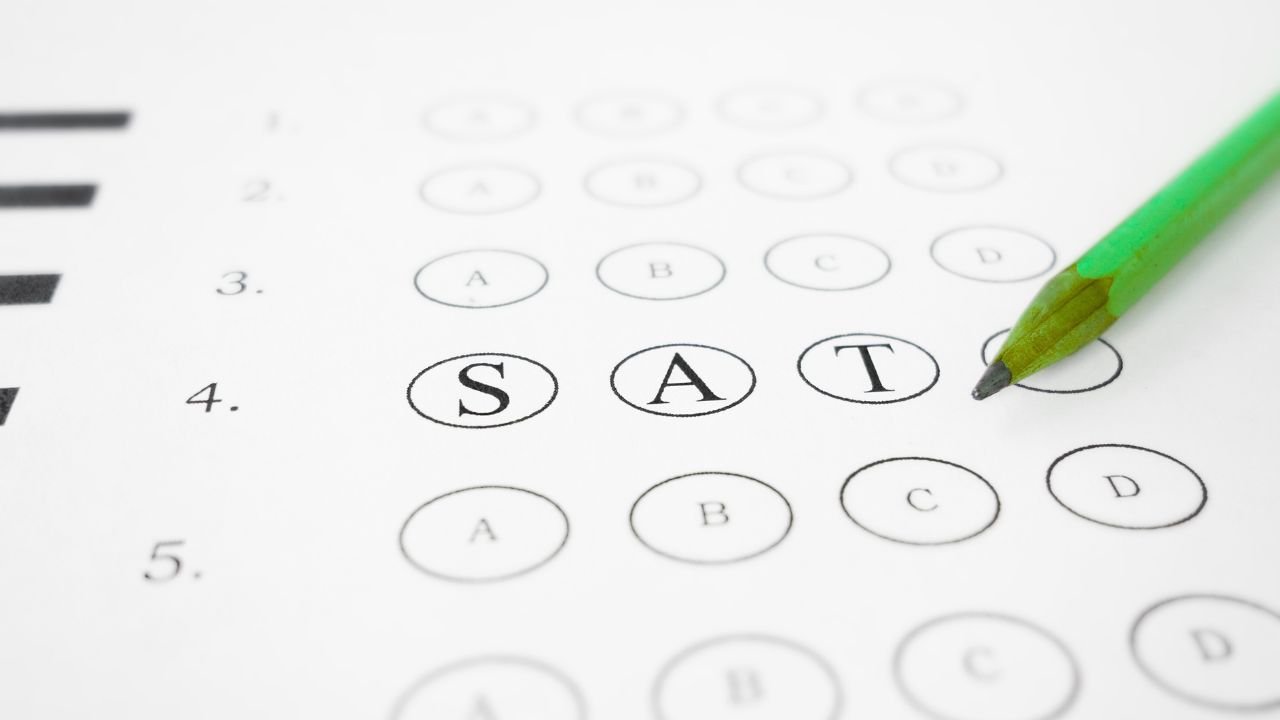
Students are preparing for the SAT way before they understand what it actually tests. Many students think it measures intelligence or memorization, but in contrast, the SAT checks something much simpler and more practical. It measures how well you read, how clearly you can write, and how logically you solve problems.
The College Board designed the modern digital SAT to reflect real academic tasks. Students should interpret information, evaluate evidence, and apply math to real situations. Colleges use SAT scores to compare applicants from different countries and schools.
If you plan to study abroad, especially in the United States, you must understand what the SAT includes and how to prepare for it efficiently. This guide explains everything in clear terms.
What’s On the SAT?
The SAT has two main sections:
1- Reading And Writing Section
This SAT section combines the two separate sections of reading and writing. The test features short passages rather than long essays. Each passage focuses on one skill. This format helps students stay focused and manage time better.
The section has:
- Duration: 64 minutes
- Questions: 54
- Format: Multiple-choice, digital adaptive
The skill tested in this section includes
Reading Comprehension
You must know:
- Understand main ideas
- Analyze the author’s purpose and tone
- Interpret evidence
- Analyze arguments
Passages are short (25–150 words), not long essays.
Grammar & Writing Skills
You should know how to:
- Fix grammar errors
- Improve sentence clarity
- Choose correct punctuation
- Select logical transitions
This section tests editing ability, not creative writing.
2. Math Section
The SAT Math section is a major anxiety-inducing part of the SAT for students. Students can use a calculator throughout the entire section. The digital SAT also includes a built-in graphing calculator:
- Time: 70 minutes
- Questions: 44
- Calculator: Allowed throughout (built-in digital calculator provided)
Major topics in tests include:
Algebra (largest portion)
- Linear equations
- Functions
- Systems of equations
Data Analysis & Problem Solving
- Ratios and percentages
- Graph interpretation
- Statistics
Advanced Math
- Quadratic equations
- Polynomials
- Exponential growth
Geometry & Trigonometry (smaller portion)
- Angles
- Area/volume
- Right triangle trig
SAT math success depends on understanding the concepts. Memorizing the formulas matters here, and students can also use a SAT math practice test PDF with answers to review and reinforce key topics.
How Long Is the SAT?
The SAT duration is 2 hours and 14 minutes. The duration is shorter than older versions of the exam.
Each section features two modules. The test has an adaptive format. When students complete the first module, the system adjusts the difficulty of the second module based on performance.
If students performed well in module 1, the next module becomes more challenging. If performance is not good, the next module becomes easier. This adaptive structure helps the test measure skill levels more precisely.
How Is the SAT Scored?
The SAT uses a scaled scoring system where each section receives a score between 400 and 1600. Several important rules apply to SAT scoring:
- The test does not have a penalty for wrong answers
- Students should attempt every question
- Harder questions carry more scoring weight
- Adaptive modules influence final scoring
Colleges do not prefer raw scores. They only prefer scaled scores, which offer fair comparison through different test dates. Most competitive universities expect scores above 1300. Highly selective institutions often expect scores above 1450.
How Do Students Register for the SAT?
Students will need to register online through the official testing portal. The process requires several steps. For this purpose:
- Create an account and select a test date.
- Choose a test center and upload a valid photo.
- Now pay the registration fee and receive an admission ticket.
Early registration helps students secure preferred test dates and locations.
How Can Students Prepare for the SAT?
When it comes to SAT prep. Students don’t have to memorize a large amount of content. Instead, students will need to focus on building basic academic skills.
Step 1: Understand the Test Format
Efficient SAT prep starts with an understanding of the test format. Students will need to learn about the adaptive structure of the SAT and how the questions will appear. This knowledge reduces anxiety and improves time management.
Step 2: Take a Diagnostic Test
A SAT practice test plays a crucial role in SAT prep. It can reveal the strengths and weaknesses of an individual. Students will need to analyze the mistakes carefully. At programs like IVY Learning, SAT prep starts with a SAT diagnostic test. This ensures that students know their strengths and weaknesses, helping them focus on areas that need improvement.
Step 3: Strengthen Core Skills
Focusing on learning the core skills is beneficial in the long term compared to memorizing the plan formula. Students should build strong reading habits and practice solving algebra problems daily. Grammar rules also require consistent practice.
Small daily practice sessions often produce better results than long study sessions.
Step 4: Practice Under Real Conditions
Time limit is a major problem with SAT prep. Most students don’t fall behind because they don’t know, but lack pacing with timed solutions. Reviewing mistakes helps students avoid repeating the same errors.
Step 5: Use Smart Test Strategies
Students should eliminate incorrect choices quickly. They should skip difficult questions and return later. These strategies help maximize scores.
SAT Changes Students Should Know in 2026
The SAT continues to evolve with several updates now shaping how students prepare for the test.
- The exam is fully digital. Test centers now provide secure devices when needed. The adaptive format continues to refine scoring accuracy.
- The Reading & Writing section now focuses more on short, skill-based passages rather than long texts. This change reflects modern learning patterns and digital reading habits.
- Math questions increasingly emphasize real-world applications. Students must interpret data rather than perform complex calculations.
These changes mean students must focus on reasoning skills rather than memorization.

SAT Format FAQs
Let’s answer your questions about what is on the SAT.
Is the SAT difficult?
Yes. The SAT may feel difficult for many students because it tests reasoning rather than memorization. Students with strong reading and understanding skills may find it less daunting.
How many times can you take the SAT?
Students can take the SAT multiple times. Most colleges consider the highest score, so retesting can improve results.
What is a good SAT score?
A score above 1200 shows solid college readiness. Competitive universities usually expect score more than 1350.
How long should you study for the SAT?
3 to six-month study with consistency is recommended for most students. Stronger students may require less time.
Does the SAT require advanced math?
No. The SAT tests high-school math concepts such as algebra and basic geometry rather than advanced calculus.
Bottom Line
Knowing what is on the SAT can help students to prepare effectively by aligning their study schedule accordingly. The SAT focuses on core academic skills that students use in college. Students with strong reading comprehension, clear writing, and logical problem-solving perform comparatively better in SAT. The digital adaptive format allows the test to evaluate student ability efficiently.
With the right plan, the SAT becomes a manageable step toward university admission rather than a source of stress.