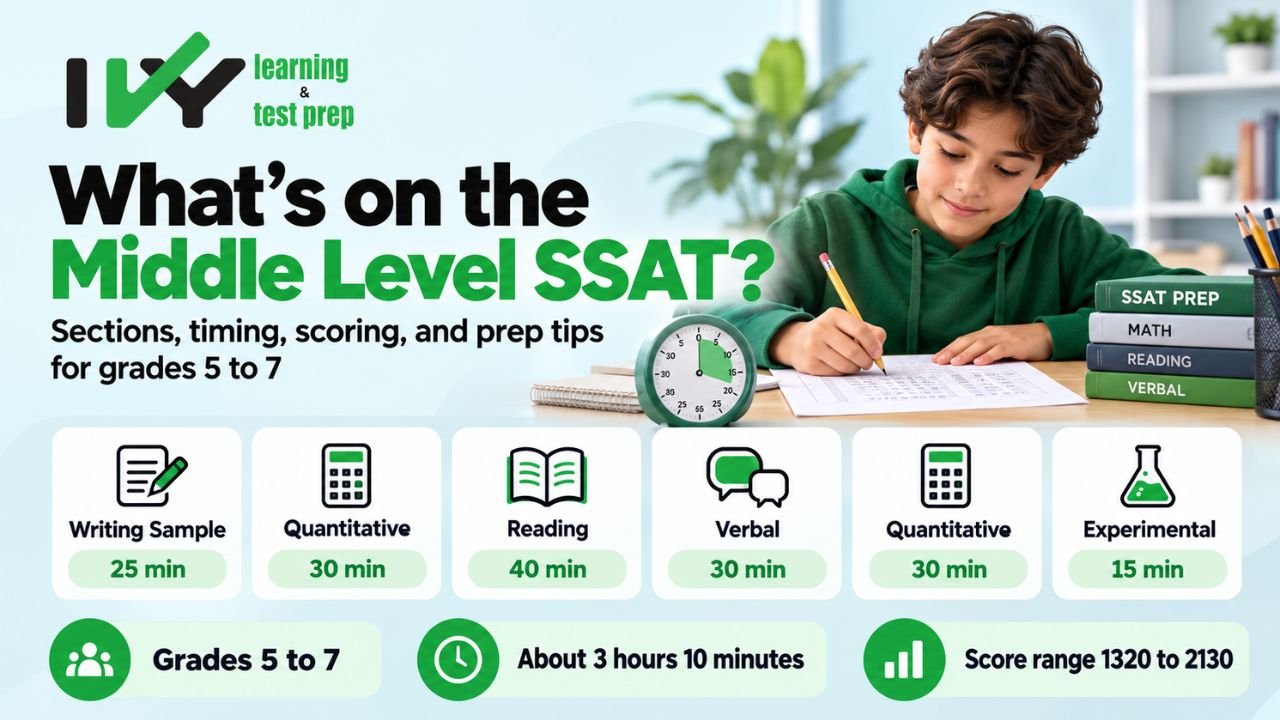
You can easily prepare for the SAT by understanding its structure. Many students practice accordingly. If you are participating in them, it’s better first to know how many questions you have to answer. Learning such aspects helps you walk into the test center with confidence. And this way, you can solve all the questions more efficiently within the given time period.
So, if you are one of those who are preparing for the SAT, keep reading this article. We will discuss the exact breakdown of the SAT paper, the time you get per question, and simple management settings.
Total SAT Questions and Their Complete Breakdown
The total number of SAT questions is 98. A few of them are from the Reading and Writing section, and the remaining ones are from the Math section. They are primarily designed to assess students’ various academic skills. Most of the portion is based on multiple-choice questions. You can get a few student-produced response math questions where answers need to be written manually instead of selecting one.
Understanding the total question breakdown helps you determine where to focus more. To get such insights, we have provided the exact division of SAT questions below:
Section | Questions | Time | Time Per Question |
Reading & Writing | 54 | 64 minutes | ~71 seconds |
Math | 44 | 70 minutes | ~95 seconds |
Total | 98 | 134 minutes | — |
How Much Does the Reading and Writing Section Contribute to the SAT?
The reading and writing section makes up about half of the SAT, with 54 questions. They need to be completed in 64 minutes.
This part is divided into two modules. Each one carries 27 questions. You get 32 minutes for one module. Curious about which type of questions are included? These questions are based on four critical areas, which are:
- Craft and Structure: Vocabulary in context, text purpose, and text structure.
- Information and Ideas: Central ideas, command of evidence, and inferences.
- Standard English Conventions: Grammar, punctuation, and sentence structure.
- Expression of Ideas: Rhetorical synthesis, transitions.
The major change in the new SAT paper is that each question is tied to a short passage. Its length remains 25 to 150 words. The old one consisted of long, multi-paragraph reading passages.
The Contribution of the Math Section in the SAT
As you can see in the table, the math section is also included in the SAT paper. It comprises 44 questions that have to be answered in 70 minutes. This part is also split into two important modules. Each one contains 22 questions. You have 35 minutes per module. So, practice accordingly during the preparation phase.
To test different math concepts, the questions are organized by four essential content areas. These are:
- Algebra (around 35% of questions): Linear equations, systems, inequalities
- Advanced Math (approximately 35%): Quadratics, polynomials, exponential functions.
- Problem-Solving and Data Analysis (around 5%): Ratios, percentages, probability, statistics.
- Geometry and Trigonometry (approximately 15%): Area, volume, circles, right triangles.
The big advantage of the digital SAT is that you can use a built-in graphing calculator while solving math questions. This is available on-screen during both modules.
What Is Adaptive Testing on the SAT?
SAT multistage adaptive testing means the sections are adaptive, not questions. It may sound unrealistic, but it’s the reality. The testing machine analyzes your performance in the first module to determine how the next module should be for you. In simple terms, you get the next part based on how you execute the first one. It is to measure your skills more accurately and ensure the test is fair for all students.
Let me prove this by highlighting the College Board’s details. They mentioned that:
“The first module of each section contains a mix of easy, medium, and hard questions. The second module either has more difficult questions or easier ones based on how you perform on the first module.”
Don’t think the total number of questions can be affected this way. They remain the same. However, the difficulty of the next part depends entirely on the result of your first section. So, if Module 2 feels harder, it’s a good thing. This showcases that you did well on Module 1.

SAT vs. Old SAT: How the Question Count Changed
Many of you may be curious about what the actual difference the digital SAT brings. One of the key updates that almost everyone knows is that the new version is shorter than the older one.
Let’s look at the comparison in detail:
Feature | Old Paper SAT (Pre-2024) | Digital SAT (2024–2025) |
Total Questions | 154 | 98 |
Total Time | 3 hours | 2 hours 14 minutes |
Sections | 3 (Reading, Writing, Math) | 2 (Reading & Writing, Math) |
Adaptive? | No | Yes |
Calculator | Only on one Math section | Entire Math section |
Although the same 400/1600 scoring scale is still used, the number of questions has been reduced by 36%. However, the questions still feel the same way. Neither very difficult nor easier.
Time Management Tips for 98 Questions
Time management is important once you know the structure. Here’s how to answer all 98 questions effectively in the given time period:
- You should answer one Reading & Writing question in 60 seconds. You have roughly 71 minutes for each. Following this lets you save extra time for difficult questions.
- You cannot waste your time in the Math section. You have about 95 seconds for each question. The questions are designed to feel more difficult as you scroll down. It’s a good move to solve the easier ones first. This way, you can get more time for the harder questions at the end.
- You may know that there is a 10-minute break between the Reading & Writing and Math sections. Use it to relax your mind. Stand up, stretch, and eat a snack to come back with more energy.
- Do not forget to attempt everything. Make sure you have done each question, since there is no penalty for incorrect answers.
FAQs About SAT Question Count
Here are the answers to some of your common questions to help you prepare for the SAT effectively:
How is the digital SAT different from traditional exams?
The digital SAT is taken by a computer and uses a more interactive interface, unlike traditional exams. It allows you to focus more on completion instead of spending time on paper arrangement. Plus, you also get built-in tools like highlighting and flagging questions, which make working easier.
What happens if I run out of time?
The system automatically submits the paper you are working on if your time is finished. The blank questions will not add any points. That’s why it’s important to attempt every question within the given time.
Can I change my answers before submitting a module?
Yes, you have full access to review and change answers before submitting a module. However, if you have opened the next section, the answers of the previous part cannot be changed.
Can I skip questions and come back later?
Yes, it is totally up to you when you want to answer which question in a section. So, you can skip confusing questions, move on to later ones, and answer them afterward.
Is rough work allowed during the SAT?
Yes, rough work is allowed for the questions on the SAT. You can use the rough sheet for this purpose. It is provided to you for calculations and notes.
Conclusion
You know now the whole structure of the SAT. The 98 questions need to be done in 2 hours and 14 minutes. This helps you take next steps smartly. For instance, you may learn management during the practice phase when performing questions under limited time. Consistent practice makes you comfortable and more confident for the exam over time.
This means that students who just focus on content without a thoughtful strategy are not much smarter. Those who plan and prepare are more likely to perform and finish the exam efficiently. With this article, you get useful insights that can help you prepare yourself for the exam like such students.
Fortunately, the College Board also provides free practice through Khan Academy and the Bluebook app. So, you can also get help from them to strengthen your preparation.