High school students planning for college admission often ask a simple question: What is AP? The answer matters because the Advanced Placement Program has become one of the most widely recognized academic programs. Students who are motivated to study higher in the United States consider opting for this program. Since its beginning in 1950, it has continued to grow under the administration of the College Board. It is the same organization that also controls the SAT and the PSAT/NMSQT. Today, millions of students enroll in AP courses each year.
In programs like Ivy Learning, educators usually guide students through AP course planning so their academic choices align with long-term academic goals. With the right strategy, AP classes can become a meaningful part of a strong high school record.
What Does AP Mean?
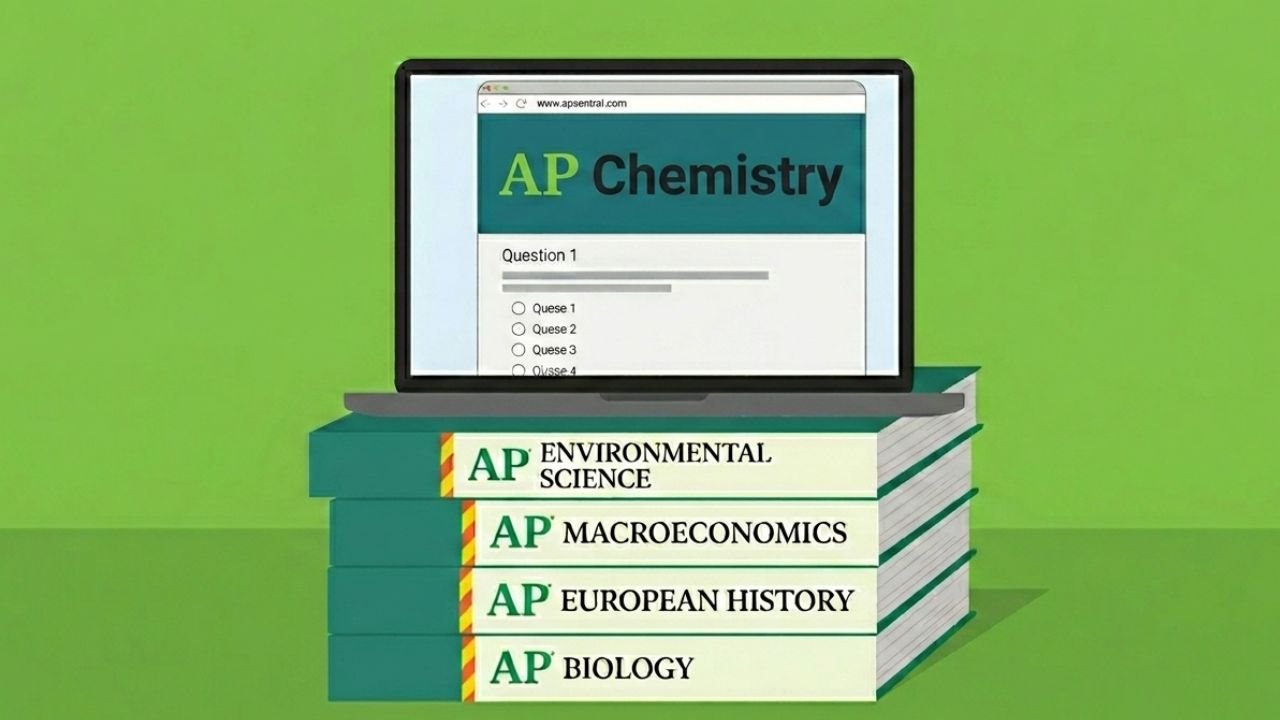
Often, newcomers wonder what AP stands for. The term AP refers to college-level academic work completed in high schools. The Advanced Placement Program includes more than 35 different subjects from different areas. The core subject areas are:
Math and Computer Science
- AP Calculus AB
- AP Calculus BC
- AP Computer Science A
- AP Statistics
Science
- AP Biology
- AP Chemistry
- AP Physics 1
Humanities
- AP English Literature and Composition
- AP United States History
Social Sciences
- AP Psychology
- AP Human Geography
- AP European History
- AP Comparative Government and Politics
- AP United States Government and Politics
- AP African American Studies
- AP Microeconomics
- AP Macroeconomics
Languages
- AP Latin
- AP Italian Language and Culture
- AP Chinese Language and Culture
- AP Japanese Language and Culture
Each course follows a standardized curriculum framework. Teachers design lessons that align with the skills and knowledge tested on the final exam.
Who Is the AP Program For?
The Advanced Placement Program is widely popular among students who want an in-depth academic challenge in high school. Students often begin AP courses in 10th or 11th grade, though some schools offer ambitious students the opportunity to start earlier. Each course focuses on a specific subject, and students can choose classes that match their interests and strengths. At this stage, many students also look for guidance on how to prepare for the AP exam so they can manage coursework effectively from the beginning.
Common AP subjects include:
- AP Calculus
- AP Biology
- AP Chemistry
- AP Physics
- AP English Literature
- AP U.S. History
- AP World History
- AP Computer Science
- AP Statistics
- AP Human Geography
- AP European History
- AP United States Government and Politics
- AP Comparative Government and Politics
- AP African American Studies
- AP Microeconomics
- AP Macroeconomics
- AP Latin
- AP Italian Language and Culture
- AP Chinese Language and Culture
- AP Japanese Language and Culture
These subjects show the academic areas students will study in college. Each course has a distinct curriculum framework created by the College Board. The framework outlines the core knowledge and skills students should completely understand before the exam. Students who succeed in AP classes often share several traits:
- Strong study habits
- Curiosity about academic topics
- Willingness to read and write extensively
- Interest in preparing for college-level work
What Is the AP Testing Schedule?
The AP Exam features a consistent annual schedule created by the College Board. Every year, the exam takes place during two weeks in May. Schools administer the exams on specific dates assigned to each subject. The typical exam timeline is:
Period | What Happens |
September–November | Students register for AP exams through their school |
March | Final registration deadline in most schools |
Early May | First week of AP exams |
Mid-May | Second week of AP exams |
July | Scores released through the College Board |
The exact exam schedule changes slightly every year, but the two-week May testing window remains consistent. For example, common AP subjects include:
- AP Calculus AB
- AP Biology
- AP English Language and Composition
- AP United States History
Each subject has a fixed test day, and the school does not choose these dates. If a student misses the main testing date, they may take a testing exam, which occurs during the third week of May.
However, AP courses do not require perfect prep. Many students take their first AP class simply to test their readiness for academic challenge. Teachers often suggest that their students select one or two AP subjects first. This approach helps students to manage their workload while building experience with advanced coursework.
When Do You Take AP Exams?
Students generally take AP exams at the end of the school year, after completing the associated course. The structure works in a simple sequence.
- Students enroll in an AP course at the start of the academic year.
- They study the subject during the year.
- They take the exam in May.
Most students begin AP coursework during 10th or 11th grade, though some schools offer introductory AP classes earlier. Typical AP timeline in high school is:
Grade | Common AP Path |
9th | Few AP options, sometimes AP Human Geography |
10th | First AP course in subjects like World History |
11th | Several AP courses, such as AP English or AP Chemistry |
12th | Advanced courses like AP Calculus or AP Physics |
Students are not required to take the AP course to sit for the exam, though the course helps prepare them for the test. Many students take two to five AP exams per year, depending on their schedule and academic workload.
At Ivy Learning, advisors often recommend that students balance AP rigor with realistic workload limits. Strong grades and deep understanding matter more than course quantity.
How to Pay for AP Exams
The College Board determines the official exam fee each year. For the 2025-2026 school year, most AP exams cost about $98 per exam in the United States. Fees may be slightly different for international schools. Students pay the fee through their school’s AP coordinator, not directly to the College Board.
Payment Options
Students usually have several ways to manage exam costs.
1. School Payment Plans
Many schools offer an installment option to students.
2. Fee Reductions
The College Board offers fee reduction programs for students with financial need.
3. State or District Subsidies
Some states cover part of the exam fee for public school students.
4. School Scholarships
Certain schools or nonprofit programs help cover exam costs for eligible students.
Students should speak with their school counselor or AP coordinator earlier in the school year to confirm payment deadlines.

What is AP: Frequently Asked Questions.
Let’s answer your questions about what AP is.
Do colleges require AP classes?
No. Colleges don’t require AP classes. However, selective universities often value rigorous coursework that shows academic challenge.
What is a good AP exam score?
AP exam uses a 1-5 scoring scale. Many colleges offer credit for a score of 3 or higher, though competitive universities often prefer 4 or 5.
Are AP classes harder than regular classes?
Yes. AP courses require deeper reading, more analysis, and college-level assignments, which makes AP classes harder.
Can you self-study for an AP exam?
Yes. Students may study independently and register through a school that administers the exam.
How many AP classes should you take?
The right number depends on academic strength, schedule balance, and college goals. Many students take 3-8 AP courses across high school.
Bottom Line
The Advanced Placement Program offers high school students a structured path for college-level learning. With the help of AP courses and AP exams, students strengthen their readiness for college study. It helps students to focus on subject knowledge and strengthen their academic discipline. The program operates on a clear annual cycle. Students sign up for courses during the school year and take the final exams during the May testing schedule. It is set by the College Board.
For many students, AP courses serve two practical goals. They deepen subject knowledge and create opportunities for college credit or advanced placement.