College applications may seem like one large task in senior year, but the process gets easier when you break it into smaller tasks. As a senior, don’t make September a season of submitting everything at once. It should be about ensuring every part of your application has a clear owner and due date. Start with your college list, then check each school’s requirements, application plan, essays, recommendations, testing policy, transcript process, and financial-aid requirements. Common App also recommends that seniors meet with their counselor early in the year and stay in contact throughout the application process. Continue reading the following to learn more about it.
What Should Seniors Do for College Applications in September?
Seniors should use September to finalize their college list, record application deadlines, check admission requirements, create application accounts, request recommendation letters, begin essays, review SAT and ACT policies, and prepare for financial-aid deadlines. Creating one master application calendar can help keep these tasks organized before early application deadlines arrive.
September College Application Checklist
Use this checklist to keep your college applications organized throughout September:
- Finalize your college list
- Record Early Action, Early Decision, and Regular Decision deadlines
- Check application requirements for each college
- Create your Common App account and add colleges
- Request recommendation letters
- Confirm transcript requirements and request transcripts if needed
- Start your personal statement and supplemental essays
- Check each college's SAT and ACT policy
- Review financial-aid and scholarship deadlines
- Create one master college application calendar
- Set personal deadlines before the actual college deadlines
- Review your application materials before October
- September Tips
Don’t try to submit every application immediately. Use September to organize your requirements, start essays, request recommendations, and build a deadline calendar so you have time to fix problems before applications are due.
Finalize Your College List Before You Start Applying
The first thing on the college application checklist is the school names themselves. Your list does not need to be large but well researched. For each college application, record:
- Application deadline
- Early Action (EA) deadline
- Early Decision (ED) deadline
- Regular Decision deadline
- Application platform
- Required essays
- Recommendation requirements
- Testing policy
- Transcript requirements
- Application fee or fee-waiver rules
- Financial-aid deadlines
- Scholarship deadlines
Do not assume that every college has the same calendar. Colleges set their own submission plans and deadlines. Common App notes that applicants should also check each institution’s specific requirements. A simple spreadsheet can prevent a common problem of finishing an application but missing one supporting document.
Decide Whether Early Action or Early Decision Fits Your Plan
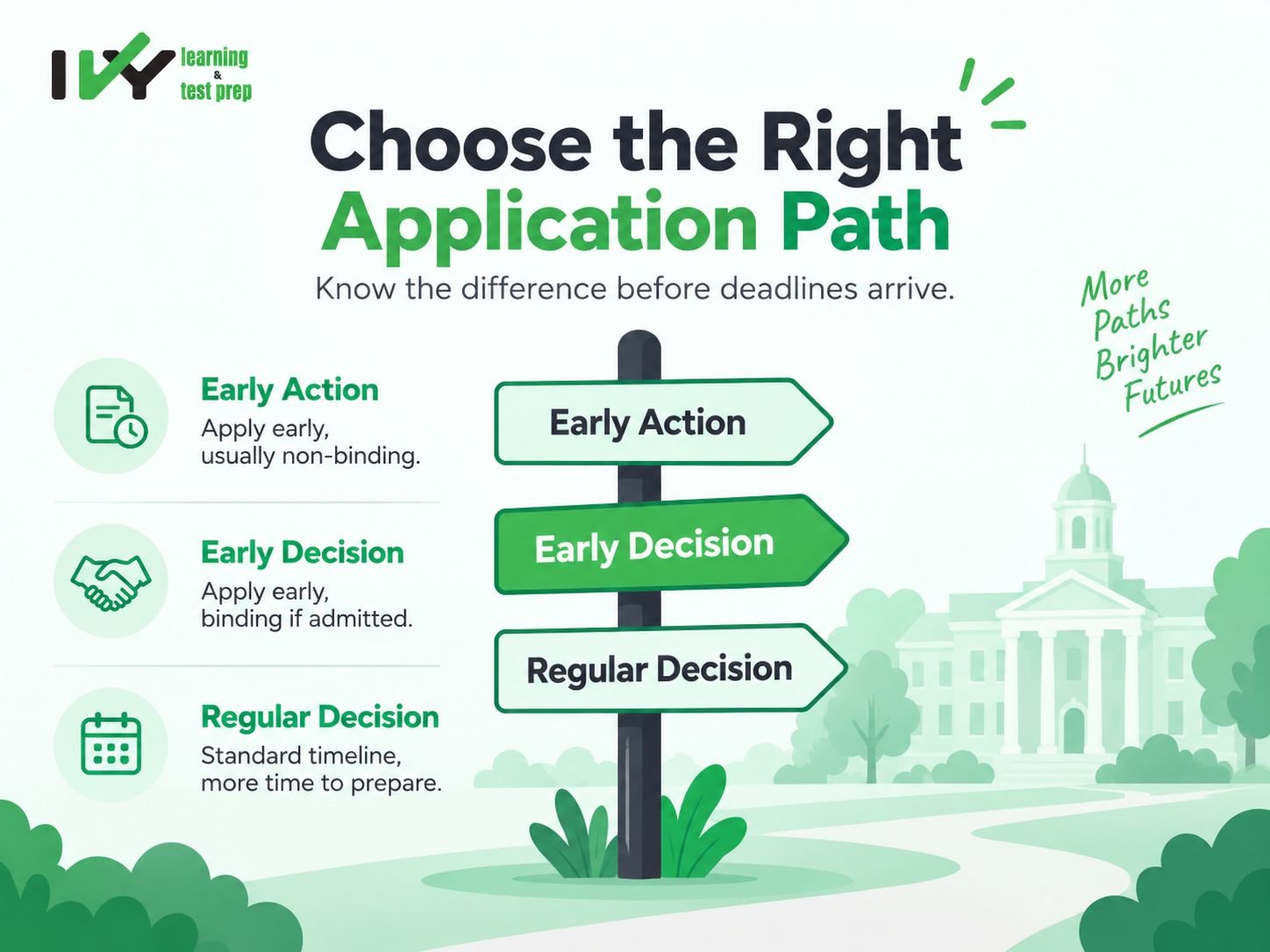
The 2nd thing on the college application checklist is understanding the admission plan.
- Early action is typically non-binding. You apply earlier and receive an earlier decision, but you are not normally required to enroll if admitted.
- Early Decision is binding. If admitted under an ED agreement, you commit to attending that institution and withdraw other applications, subject to the terms of the agreement.
Learning this difference matters. Do not choose ED simply because someone tells you that applying early is better. You should first confirm that the college is your clear first choice and that your family understands the financial implications.
Common App supports several admission plans, including Regular Decision, Rolling Decision, Early Action, Early Decision, and restrictive early-action plans.
- Important: Early Decision
Early Decision is binding. Before applying ED, make sure the college is your clear first choice and that your family understands the financial implications.
Create Your Application Accounts and Build Your Profile
If you are planning to use Common App, create your account and start entering information in September. Don’t just wait for the first deadline. Common App helps students create a profile, add colleges, review requirements, collect materials, and work through the application before submission. You will need to prepare your:
- Legal name and contact information
- High school information
- Course history
- Current senior-year courses
- Grades
- Honors and awards
- Extracurricular activities
- Employment
- Volunteer work
- Family information
- Testing information
This is where many students find out that they cannot remember dates, leadership roles, and job responsibilities. They cannot even remember the names of awards from previous years. September gives you time to verify those details.
Ask Teachers and Counselors for Recommendations
If your colleges require recommendation letters, ask your teachers before deadlines become urgent. Ask teachers who are familiar with your academic work. They should be available to discuss how you learn, contribute, solve problems, or respond to challenges. Give them enough information to write a specific letter. Prepare a small recommendation packet with your college list, application deadlines, and intended major, if known.
Also add the activities and responsibilities, resume or activity list, important accomplishments, and a short explanation of your academic goals.
Common App explains that colleges set their own recommendation requirements, while counselors usually submit school forms and transcripts. The practical approach would be to ask early, provide useful information, and track submission status.
Start the Personal Essay and Supplemental Essays
Don’t just wait until an early-application deadline is two weeks away to write your personal statement. September is the month to create a strong first draft.
Your essay should show something about the way you think, your values, or how an experience shaped you. It does not need to describe the most dramatic event of your life. Then make a second list for supplemental essays. Some colleges may ask why you want to attend, why you selected a particular program, or how you would contribute to their community.
Treat each prompt as its own question. Avoid copying one generic paragraph into every college’s supplement.
College Application Tasks Seniors Often Forget
Some application tasks are easy to overlook because they happen outside the main application form. Before September ends, check that you have:
- Confirmed who is responsible for submitting your transcript
- Asked recommenders early enough to meet your deadlines
- Checked whether each college requires official test scores
- Reviewed supplemental essay requirements
- Recorded scholarship deadlines separately from admission deadlines
- Confirmed financial-aid requirements for each college
- Checked whether any program or major has additional application requirements
- Added personal deadlines before the official submission dates
Check SAT, ACT, and Testing Requirements
Testing policies are still different for each college, so seniors should check each institution rather than just relying on test option assumptions. NACAC recommends that seniors register for the SAT or ACT in August or September if they haven’t taken an exam or want another attempt. If you are planning to take another test, check whether its score-release date falls before the college’s deadline.
Also, check whether the college admission requires scores, allows students to submit scores optionally, and has a preferred test policy. Do check if they accept superscoring and require other exams for specific programs. Keep official score-reporting requirements on your checklist.
Build Your Financial-Aid Checklist Now
College planning is incomplete when the application is submitted. Create a separate financial-aid calendar for FAFSA, CSS Profile, institutional aid forms, scholarships, and college-specific deadlines. The FAFSA is used to determine eligibility for federal student aid. Also, states and colleges may use FAFSA information for their own financial aid programs.
Federal Student Aid advises families to follow the earliest applicable school and state deadlines instead of relying only on the federal deadline. For the 2026–27 cycle, FAFSA became available October 1, and the CSS Profile also opens each year on October 1. For students applying for fall 2027 admission, check the current 2027–28 FAFSA release information and each college’s published financial-aid deadline as the cycle opens.
The important September task is preparation. Make sure the student and required parent contributors have the accounts and financial records they will need.
Create One Master College Application Calendar
This can be the most useful September habit. Don’t just keep the headline in your head; create one calendar with columns for,
“College, application type, deadline, essay, recommendation, transcript, test scores, financial aid, and submitted”
Use different rows for different colleges. Add personal deadlines before the actual college deadlines. For instance, if an application has a due date of November 1, then you might set your personal completion target several days earlier.
That buffer matters because applications involve people, not just software. A teacher may submit a recommendation late, and a transcript request may require processing time. A portal may show a missing document that requires investigation.
- Deadline Tip
Set your own deadline several days before the college’s official deadline. This gives you time to handle missing documents, recommendation letters, transcript issues, or other last-minute problems.
A Simple September College Application Timeline
Early September: Finalize your college list, record deadlines, check requirements, and create or update your application accounts.
Mid-September: Request recommendation letters, confirm transcript procedures, begin your personal statement, and review supplemental essay requirements.
Late September: Check testing requirements, organize financial-aid information, update your application calendar, and review anything still missing.
Before October: Make sure every upcoming deadline is on your calendar and that you know who is responsible for each remaining application item.

Review Everything Before October Arrives
By the final week of September, you should be able to answer the five questions.
Where are you applying, what does each college require, who owes me something, and what do I owe each college? Also, learn the answer to what would happen next. Your October, November, and December tasks should already be on your calendar.
This is the same approach we use when planning physical projects at Ivy Test Prep. The finished surface depends on what happens underneath it. A college application works the same way. Good September preparation reduces problems when deadlines begin to stack up.

Your success story begins with us!
We are here for you! Schedule a call with our consultant for personalized advice on achieving your learning goals
September College Applications FAQS
Let’s answer your questions about the College Application Checklist.
What should seniors do for college applications in September?
Finalize the college list, confirm requirements and deadlines, and start applications and essays. Request recommendations, check transcripts, review testing policies, and get ready for financial-aid applications.
Should I start my college essay in September?
Yes. September gives you enough time to draft, revise, and receive useful feedback before early-application deadlines.
When should seniors ask for recommendation letters?
Ask as early as possible. The preferable time is September, especially if your teachers will be writing several letters for different students.
Should I apply Early Action or Early Decision?
That depends on the college, your application readiness, and your circumstances. Early Action is generally non-binding, while Early Decision is binding if you are admitted under the agreement.
When should I complete FAFSA for college?
For the relevant application year, monitor the official FAFSA opening date and submit before the earliest applicable college or state deadline. Financial aid deadlines can differ from admission deadlines.
Do all colleges require SAT or ACT scores?
No. Testing requirements vary by institution and can change, so check the current testing policy for every college on your list.
What should I have completed before October for college applications?
Before October, seniors should have a finalized or nearly finalized college list, application deadlines recorded, recommendation requests sent, essays underway, testing requirements reviewed, transcripts planned, and financial-aid deadlines added to their calendar.