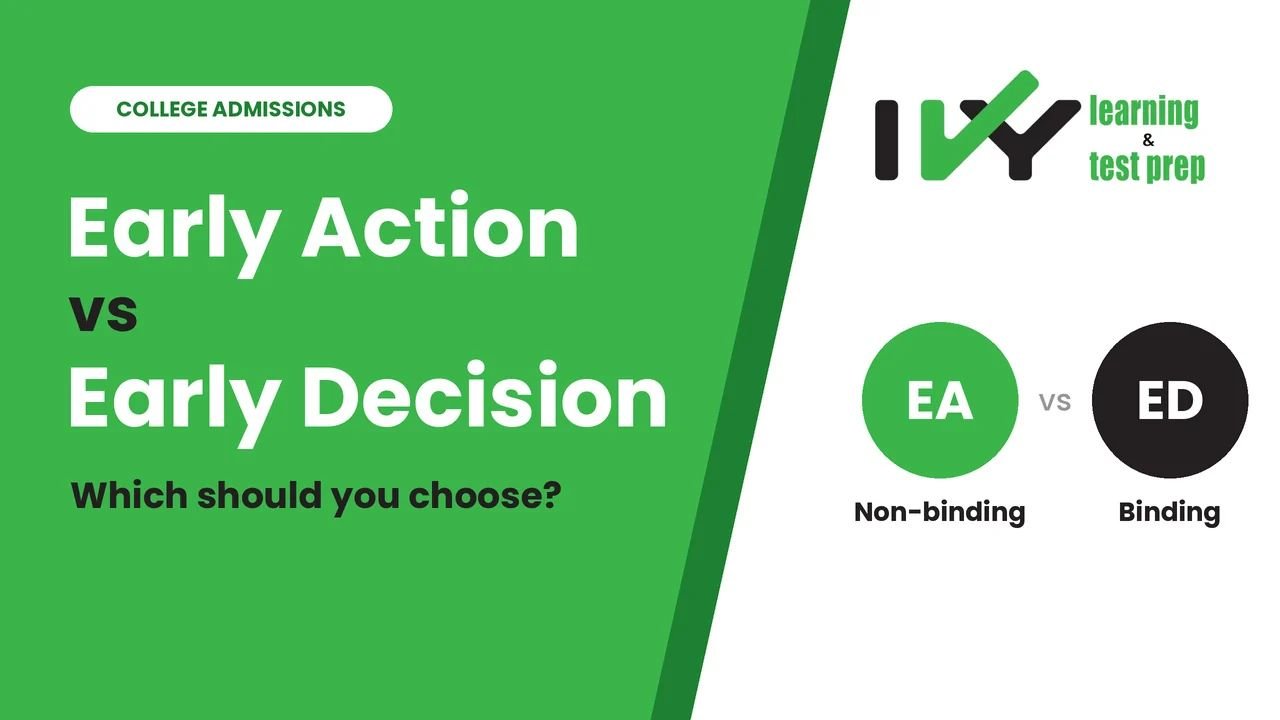
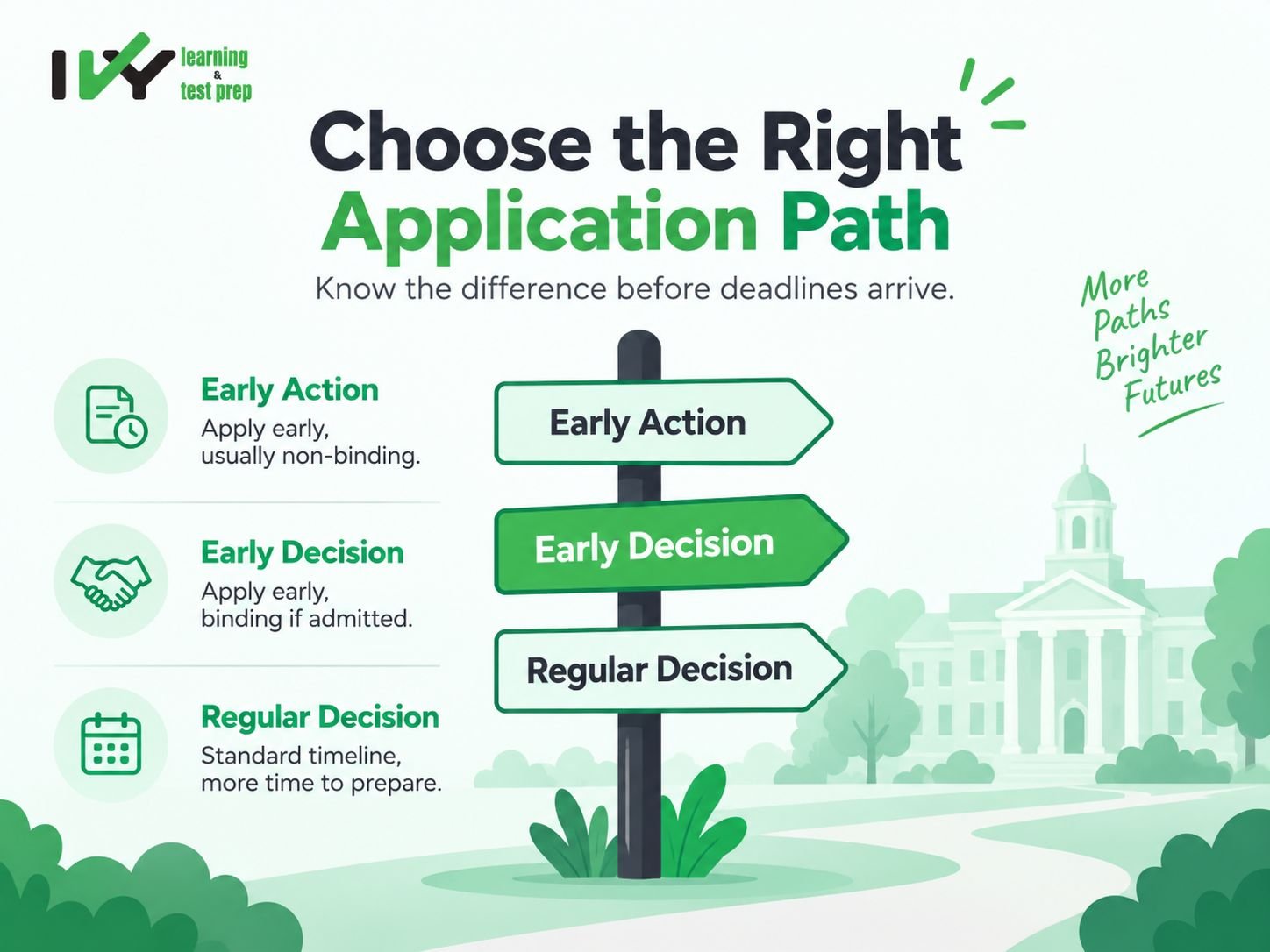
Early Action and Early Decision affect college admissions more than students expect. Early Action lets you apply early without committing to attend. Early Decision (ED) refers to agreeing to a binding application plan. Once the application is accepted, you need to enroll and follow the rules and conditions of the Early Decision agreement.
What is the right choice for you depends on your top college, financial situation, and how much flexibility you need.
Understanding the key differences in Early Action vs Early Decision helps you choose the college application plan that fits your college goals.
Early Action vs Early Decision: Key Differences
Both plans offer an earlier admission decision, but the commitment you make and the choices available afterwards are different. Let’s get a quick overview of Early Action vs Early Decision:
| Feature | Early Action (EA) | Early Decision (ED) |
|---|---|---|
| Binding Agreement | It is a nonbinding plan. You don’t have to attend the college if your application is accepted. | It is a binding option. You agree to attend if accepted, subject to the agreement’s terms. |
| Application Deadline | Usually in October or November, depending on the college. | Also in October or November, depending on the college. |
| Decision Notification | Often between December and February. | Commonly released in December. |
| Applying to Multiple Colleges | Allowed, unless the college applies restrictions. | You apply to only one college through a binding ED plan at a time. |
| Comparing Financial Aid Offers | You can compare offers before deciding where to enroll. | You generally commit before comparing competing offers. If the financial aid package is inadequate, contact the college to discuss your options. |
| Enrollment Decision | You can usually wait until May 1 to decide. | You must enroll if accepted under the binding agreement. |
Introduction to Early Action
As its name suggests, Early Action (EA) is an early college application option that serves as a nonbinding college admission plan. It allows students to submit their applications before the regular admission cycle begins and receive their admission decisions sooner.
The ease of this plan is that students don’t have to enroll immediately if a college accepts their application. They can see other admission offers, compare financial aid packages, and decide which college suits them best.
Students can apply to multiple colleges under the same plan, as they don’t make any agreement. Check each institution’s application policy before applying, because some colleges offer Restrictive Early Action or Single-Choice Early Action. These limit your ability to apply early to other institutions.
Early Action Application Timeline
Most colleges set their Early Action application deadlines in October or November and release admission decisions between December and January. However, some colleges announce their decisions in February. Students who receive an Early Action acceptance usually have until May 1 to make their final enrollment decision.
What Is Early Decision?
Unlike Early Action, Early Decision is a binding college admission plan. It is an early application option for students who have already chosen their first-choice college. This means you can submit your admission application before the regular deadline and hear back from the college sooner.
Consider it a commitment. You are expected to enroll and withdraw your applications from other colleges if your application is accepted. The applicant, the student’s parent or official guardian, and the school counselor sign the Early Decision agreement.
Early Decision Application Timeline
Usually, colleges have Early Decision I deadlines in November and release admission decisions in December. Some also offer Early Decision II (ED II), which gives students more time to apply. However, it still carries the same binding commitment. Its deadlines typically fall in January, and decisions are commonly announced in February.
Important: Early Decision can suit students who are certain about their college choice and have considered all aspects. If the financial aid offered does not meet your family’s needs, you can request to be released from the agreement. You must discuss your situation with the college. The College Board’s facts about Early Decision and Early Action explain how these binding rules work.
Pros & Cons of Early Action
Although Early Action allows earlier admission without commitment, it also comes with deadlines and some restrictions. Like any admission plan, it has both advantages and disadvantages, which we cover below:
Pros of Early Action
1. Receive Admission Decisions Earlier
One of the big benefits is hearing back from colleges sooner than Regular Decision applicants. This helps you understand your admission options earlier and plan your next steps accordingly.
2. Students Are Not Bound
Students are not limited to just one option in this plan. They can freely apply to multiple colleges and decide where to enroll later. However, restrictions can apply depending on each college’s admission policy.
3. More Time to Decide and Compare Financial Aid Offers
Choosing Early Action gives you enough time to consider your college choices before making a final decision. Compare the financial aid offers of different colleges, review the total cost of attendance, and choose the one that best fits your preferences.
Cons of Early Action
1. Earlier Application Deadlines
The application window can feel short since it ends earlier than Regular Decision. You have to complete and submit your college applications & essays and collect recommendation letters in the given time.
2. Less Time to Improve Your Application
Applying in a rush can lead to mistakes in your application. It also leaves you with less time to improve your grades, retake standardized tests, or strengthen other parts of your application.
3. Admission Is Not Guaranteed
Some applicants think applying earlier than others guarantees college admission, which is wrong. Acceptance is based on how strong your profile, academic background, and application are.
4. Restrictions at Some Colleges
Applicants who choose Restrictive Early Action (REA) or Single-Choice Early Action (SCEA) may not be able to apply early to other institutions. As the policy varies by college, check each school’s rules before submitting your applications.
Pros & Cons of Early Decision
Early Decision works best for students who have one clear first-choice college, as it requires the applicant’s commitment. If you are considering multiple colleges, look carefully at the possible drawbacks below.
Pros of Early Decision
1. Receive an Admission Decision Earlier
Students choose Early Decision to hear back about admission in December if they apply under ED I. This way, you find out where you stand months before Regular Decision applicants receive their results. It benefits students who want to know their admission status early and start planning for college sooner.
2. Show Your Strong Interest in a College
Choosing Early Decision shows the college that you are genuinely interested in attending, that you consider it your first choice, and that you are ready to enroll if accepted with an adequate financial aid package. Keep in mind that it does not guarantee acceptance or automatically increase your chances of admission.
3. Plan for College Earlier
The big advantage of Early Decision is that you don’t have to wait for decisions from several colleges. Once accepted through Early Decision, you can start preparing for your first year sooner. You can focus on housing, enrollment requirements, and other arrangements.
Cons of Early Decision
1. You Must Commit to One College
The key limitation of this option is the binding commitment. Applicants cannot freely compare offers and choose another college after acceptance. You must withdraw your other applications and enroll at the college, provided its financial aid offer makes attendance affordable.
2. Limited Time to Compare Financial Aid Offers
As you have to make your decision before receiving all your admission offers, you may miss out on better options. This makes it harder to determine which college is the most affordable option for your family.
3. You Can Apply Early Decision to Only One College
It limits your binding application to a single institution. If you have multiple colleges in mind, you can choose one for Early Decision and apply to the others through different admission plans. However, choosing just one can be challenging.
4. Earlier Deadlines Leave Less Time to Prepare
Most Early Decision I deadlines fall in November. This means you need to finish your college applications, essays, and other required materials sooner. Rushing through recommendation letters, college application essays, or test preparation can leave important parts of your application less polished.
Final Verdict: Which Application Plan Is Right for You?
You can determine which plan would work for you by considering key factors. These include your college preferences, financial situation, and readiness to commit.
Early Action is a flexible option. It lets you explore multiple colleges, compare admission offers, and review financial aid packages before making your final choice. Meanwhile, choosing Early Decision makes sense when you are certain about your option and willing to make a commitment.
Keep in mind that neither plan guarantees admission, and neither is better than the other. Take your time to review each college’s application requirements, deadlines, and financial aid policies. Choose a plan that supports your goals without putting unnecessary pressure on your college decision. If you want expert help building your college list and application strategy, explore our college admissions counseling.
Frequently Asked Questions About Early Action vs Early Decision
Below are answers to some questions that may still be unclear to you.
What Does It Mean to Be Deferred Under Early Action?
Being deferred under Early Action means that your application is moved to the Regular Decision pool for reevaluation. You will receive a final admission decision later, according to the college’s notification schedule. A deferral is not a rejection.
Can You Apply to Another College Through Early Decision After an Early Action Rejection?
Yes, you can freely choose another college to apply to if your Early Action application is rejected. As Early Action is a nonbinding plan, it doesn’t restrict you from applying to another institution under a different admission plan.
Can You Change Your Early Decision Application to Regular Decision?
Yes, students can switch from Early Decision to Regular Decision before the college releases its admission decision. To do this, send a polite request to the admissions office by email. Every institution has its own rules and deadlines, so check its policy before making the request.
Does Applying Early Decision Guarantee a Higher Chance of Admission?
No, Early Decision does not automatically get you into the college. Some colleges report higher acceptance rates for Early Decision applicants. However, the admission decision depends on your college applications and essays, academic record, and the college’s selection criteria.
Can You Receive Financial Aid If You Apply Through Early Decision?
Yes, you can receive both need-based grants and merit scholarships if you apply through Early Decision. You have to submit the required forms, such as the FAFSA, by the college’s deadlines. If the financial aid offer is insufficient, discuss your situation with the college and request a release from the agreement.